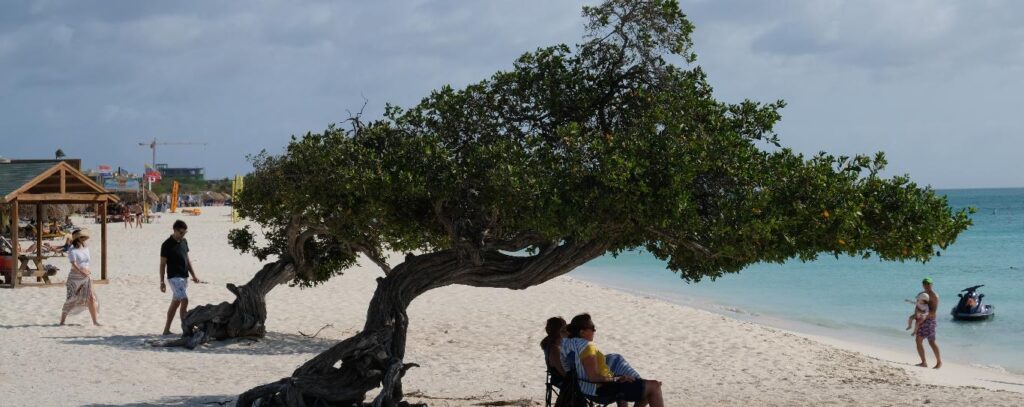
Aruba is famous for its beaches, and for good reason. The island’s northern and western coasts offer calm, clear water protected from strong currents, while the wilder eastern side rewards travelers who want a quieter, more rugged experience. Here are the beaches that belong on every Aruba itinerary.
Eagle Beach
Consistently ranked among the best beaches in the world, Eagle Beach stretches along Aruba’s low-rise hotel district and is famous for its iconic twisted divi-divi trees. The sand is soft and wide, the water is shallow for a long way out, and sunsets here are spectacular. It is an excellent choice for families and anyone who wants space to spread out.
Palm Beach
Lined with the island’s high-rise resorts, restaurants, and water sports operators, Palm Beach is the liveliest stretch of sand on the island. It is the best base if you want beach bars, jet ski rentals, and nightlife within walking distance of your hotel.
Baby Beach
Tucked at the island’s southeastern tip, Baby Beach is a shallow, horseshoe-shaped lagoon that is perfect for young children and inexperienced swimmers. The calm, warm water and light snorkeling make it a favorite day-trip destination away from the busier hotel strip.
Arashi Beach
A short drive north of the resorts, Arashi Beach is a favorite among snorkelers and divers thanks to its clear water and easy access to nearby reefs. It is quieter than Palm or Eagle Beach, with fewer crowds and a more local feel.
Mangel Halto
Surrounded by mangroves, Mangel Halto offers calm, shallow water and some of the best snorkeling on the island just steps from shore. It is a popular spot with local families on weekends and a great alternative if you want to escape the resort crowds.
Boca Catalina
A small, sheltered cove with calm turquoise water, Boca Catalina is ideal for an afternoon of snorkeling close to the rocks on either side of the bay. It has limited shade, so plan to bring your own umbrella or arrive early.
Best time to visit: Aruba’s beaches are enjoyable year-round thanks to consistent trade winds and warm temperatures. Early morning is the best time to beat the crowds and enjoy calm water for snorkeling.
Dos Playa and Boca Grandi
On the wilder east coast, Dos Playa offers dramatic dunes and strong surf that draws bodyboarders, while nearby Boca Grandi is one of the island’s top kitesurfing and windsurfing spots thanks to steady trade winds. Swimming currents here can be strong, so these beaches are better suited to watching waves and wind sports than calm-water swimming.
Rodgers Beach
Just next to Baby Beach, Rodgers Beach offers similarly calm, sheltered water with a more low-key, local feel and a handful of casual restaurants nearby. It is a good alternative if Baby Beach feels crowded on weekends.
Snorkeling and Beach Gear Tips
Most hotels and beach kiosks rent snorkel gear, floats, and beach chairs, but bringing your own mask and reef-safe sunscreen saves money and protects the coral. Water shoes are useful at rockier beaches such as Boca Catalina and Mangel Halto, where the entry point is not always sandy.
Safety and Currents
The northern and western beaches are generally calm and well protected, but conditions can change with the wind and season, and lifeguards are not present everywhere. Always check for posted flag warnings, avoid swimming alone at quieter beaches, and take extra care at east coast beaches like Boca Grandi and Dos Playa where currents are noticeably stronger.
Best Beaches for Photography
For classic postcard shots, Eagle Beach’s divi-divi trees at sunrise or sunset are hard to beat, while the turquoise water and rock formations at Boca Catalina and Mangel Halto make for excellent underwater and drone photography on calm days.
Getting to the Beaches
Most hotel-strip beaches, including Palm Beach and Eagle Beach, are walkable from nearby resorts. Reaching Arashi, Boca Catalina, Mangel Halto, and the southeastern beaches like Baby Beach and Rodgers Beach is easiest with a rental car or taxi, since public transportation options are limited outside the main hotel corridor.
Beach Etiquette and Sustainability
Even at busy hotel-strip beaches, a few simple habits go a long way toward preserving what makes Aruba’s coastline special. Avoid touching or standing on coral, use reef-safe sunscreen instead of standard formulas that can damage marine ecosystems, and pack out any trash you bring, including cigarette butts and food wrappers. Beach vendors and water sports operators are plentiful, but choosing licensed operators helps support responsible tourism practices on the island. If you bring your own beach chairs or shade tents, be mindful of turtle nesting areas, which are sometimes marked off with tape during nesting season on quieter stretches like Eagle Beach. Small choices like these help keep Aruba’s beaches healthy and beautiful for the next visitor and for generations of locals who depend on tourism for their livelihood.
Affiliate Disclosure: Some links on this page are placeholders for affiliate partners. When active, we may earn a small commission on bookings made through these links at no extra cost to you.